



Indian automobile sales jumped sharply in November 2025 after the GST revision, boosting demand for passenger vehicles and SUVs. Here’s how tax cuts reshaped the auto market.

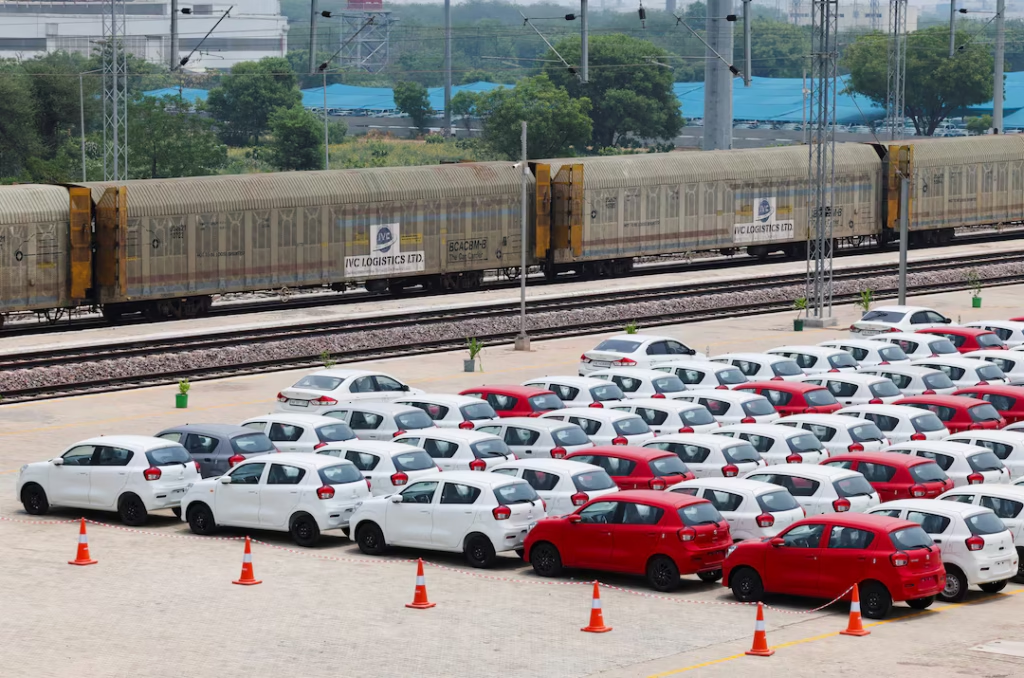
November 2025 proved to be a landmark month for the Indian auto industry. Against the backdrop of a cautious economic environment and historically slow post-festive months, auto sales surged — driven largely by recent tax reforms and early festive-season momentum. Passenger vehicles, especially small cars and SUVs, registered double-digit growth, pointing to renewed buyer confidence. For automakers and dealers alike, this resurgence signals a promising end to the calendar year.
What Sparked the Surge: GST Cuts and Consumer Sentiment
GST Revisions: Making Cars More Affordable
A key driver behind the sales boom was the reduction of the Goods and Services Tax (GST) on various vehicle categories. The tax cut effectively lowered the on-road cost of new cars, making them more accessible to a larger pool of buyers — including first-time buyers and middle-income households. This reduction helped shrink the price gap between older, used cars and new models, tilting buyer preference toward brand-new vehicles.
Post-Festival Demand + Dealer Push
Besides price incentives, dealers ran aggressive promotional campaigns coinciding with festive discounts, free accessories, and extended financing offers. This combo — favourable GST rates + seasonal deals — created an ideal buying window, prompting many buyers who had been waiting for the right moment.
Pent-Up Demand for SUVs and Compact Cars
Over the last few quarters, many buyers held off purchases, waiting for tax clarity, better features, and newer offerings from OEMs. Once the GST news dropped and several new models launched, pent-up demand unleashed. Compact SUVs and budget-friendly hatchbacks saw particular demand, as they offer a balance of affordability, style, and practicality.
Winners: OEMs & Dealers Who Reaped the Most
Popular automakers such as Maruti Suzuki, Tata Motors, Mahindra & Mahindra and a few others emerged as the biggest beneficiaries. Their entry-level and mid-size models — especially small cars and entry-level SUVs — accounted for a substantial portion of the increased volume.
Dealerships across the country saw faster inventory turnover, higher walk-ins, and improved cash flow. Even smaller dealers in tier-2/tier-3 cities reported healthy footfall, showing the recovery was not limited to metro or urban buyers alone.
Implications for the Auto Industry
Revival of Price-Sensitive Buyer Segment
The surge confirms that the “price-sensitive segment” remains the backbone of India’s auto demand. When prices align with buyer budgets — via tax cuts or promotional offers — there’s significant latent demand ready to convert. This gives OEMs a clear signal: competitive pricing + value-for-money features = more volume.
Opportunities for New Launches
Given the uptick in demand, automakers have reason to accelerate new model rollouts, especially in the compact- and mid-SUV space. The improved affordability also lowers the entry barrier for first-time buyers — which can drive volume for smaller, feature-rich cars.
Shift in Market Dynamics — Used vs. New Car Purchase
Historically, many cost-conscious buyers opted for used cars. But with lowered prices on new cars and easy finance deals, the balance may tilt back toward new vehicle sales — which benefits OEMs, dealers, and overall market health.
What Next: Will the Momentum Sustain?
While November’s performance is encouraging, sustaining this growth will depend on several factors:
- Consistent Price Advantage: If the GST benefits hold and new tax/regulatory headwinds don’t emerge.
- Product Availability & Timely Deliveries: OEMs and dealers must manage supply chains to meet demand without long waiting periods.
- Affordability + Value Features: As buyer expectations rise, cars offering value — in terms of fuel efficiency, safety, features — will attract more buyers.
- Rural & Semi-Urban Demand: Growth in smaller towns and rural markets will be key to broad-based volume.
If these align, the positive trend could carry over into early 2026 — potentially making it one of the best years for Indian passenger vehicle sales in recent times.
Conclusion
November 2025 has shown that a well-executed policy change — like the GST reduction — combined with favourable market conditions and dealer push, can significantly revive auto demand. For buyers, this translates into better value for money; for OEMs and dealers, it means healthy volumes and improved market sentiment. As the Indian auto market accelerates into 2026, all eyes will be on whether this momentum holds — and whether manufacturers continue to offer compelling price-to-value propositions.