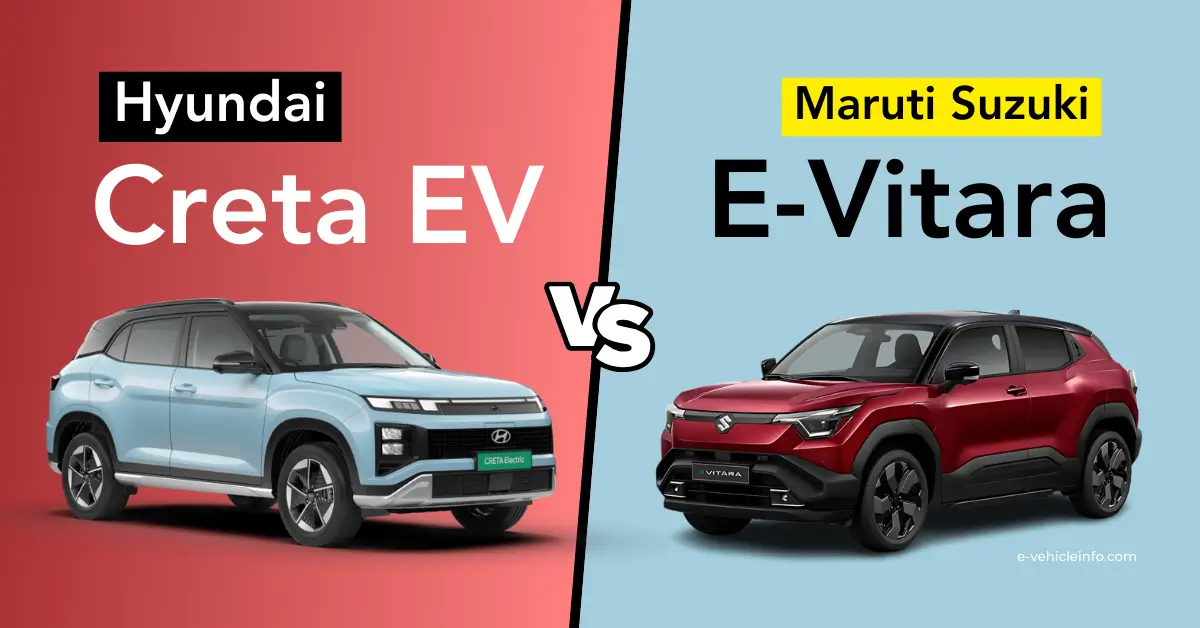
Maruti e-Vitara vs Hyundai Creta EV – 2025 India EV SUV Comparison
Compare Maruti e-Vitara and Hyundai Creta EV on range, price, features, comfort & suitability before buying your next EV SUV in India — full spec breakdown.
Why This Comparison Matters
With EV adoption rising fast in India, the launch of e-Vitara (Maruti’s first electric SUV) and Creta EV (the electric avatar of India’s favourite compact SUV) marks a turning point. Both promise to deliver the big benefits of EVs — low running cost, modern tech, better features — while offering SUV practicality.
Choosing between them isn’t trivial. Each has unique strengths. This comparison helps you decide based on what matters more for your needs (range, price, features, brand reliability, daily driving or occasional long drives).
1.At-a-Glance Spec & Price Comparison
| Specification | Maruti e-Vitara | Hyundai Creta EV |
|---|---|---|
| Expected Launch (India) | December 2025 | Early 2025 (already unveiled) |
| Expected Ex-Showroom Price | ₹17 – 22.5 L | ₹18 – 24.5 L |
| Battery Options | 49 kWh & 61 kWh (LFP) | 42 kWh & 51.4 kWh Li-ion |
| Claimed Range (on paper) | ~500 km (top battery) | 390 km (base) / ~473–510 km (LR) depending on variant |
| Performance (0–100 km/h) | ~– (not officially published yet) | 0–100 km/h ~7.9 s (in LR) |
| Seating Capacity | 5 | 5 |
| Key Features | EV-dedicated platform (Heartect-e), modern styling, expected ADAS, sunroof etc. | Dual 10.25″ screens, V2L, ventilated seats, panoramic sunroof, ADAS, 433 L boot, proven ICE-SUV practicality |
Quick takeaway: Both are aimed at similar price and segment. On numbers, Creta EV looks more “certified” (with ARAI-range, known 0–100 km/h data), while e-Vitara bets on Maruti’s trust & brand reliability plus a strong battery pack for claimed 500 km range.
2. Battery, Range & Driving Performance — What Real-World Buyers Should Know
- e-Vitara uses LFP battery packs (49/61 kWh), a more stable and long-lasting chemistry suited for Indian conditions. Top pack claims ~500 km range.
- Creta EV offers 42 kWh and 51.4 kWh packs. Official ARAI / MIDC numbers: 390 km (base) / up to 510 km (long-range).
Realistic expectation: Considering climate, AC use, terrain — both likely to deliver 350–420 km per full charge on regular use. For long-distance trips, mid-range battery + fast charging will matter.
Driving Dynamics & Smoothness
- Creta EV’s LR variant claims 0–100 km/h in ~7.9 seconds — brisk acceleration for its class.
- e-Vitara’s performance hasn’t been officially published yet — but given similar battery specs and SUV-class body, expect decent torque and smooth city driving.
- EV advantages: instant torque, quiet rides, fewer maintenance worries; both SUVs built on EV-first / adapted platforms ensure better stability and safety.
Verdict: If you want more “sporty / responsive” feel — Creta EV LR edges ahead. For “balanced range + practicality + reliability,” e-Vitara should do well.
3. Interior, Features & Comfort — Tech and Everyday Usability
Hyundai Creta EV:
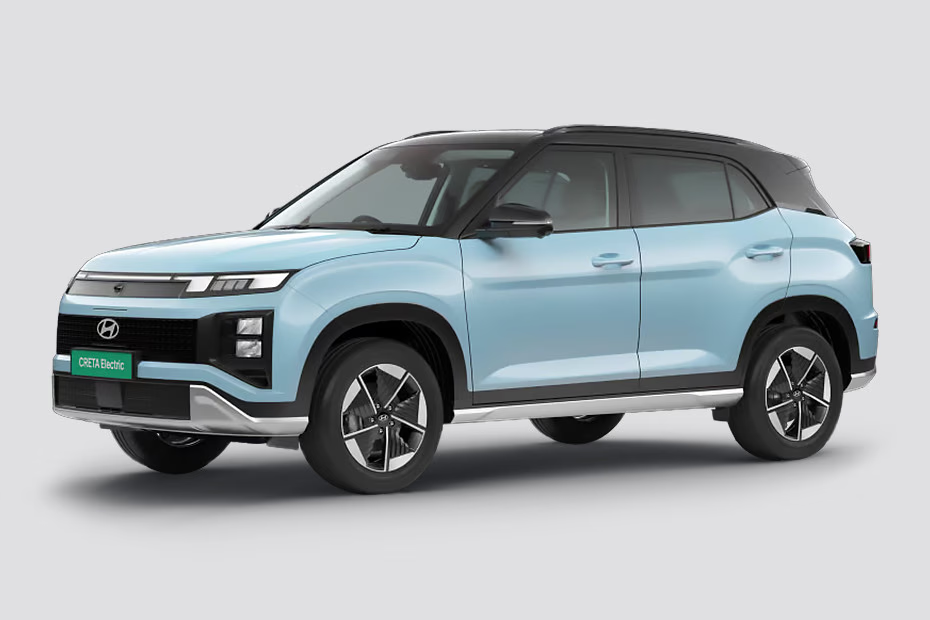
- Interior derived from tried-and-tested Creta DNA — spacious cabin, proven ergonomics.
- Premium touches: dual 10.25″ screens, ventilated seats, panoramic sunroof, V2L charging (use car as power source), cooled storage console, ambient lighting.
- Practicality: 433 L boot, 200 mm ground clearance — suits Indian roads / potholes / speed breakers.
Maruti e-Vitara:
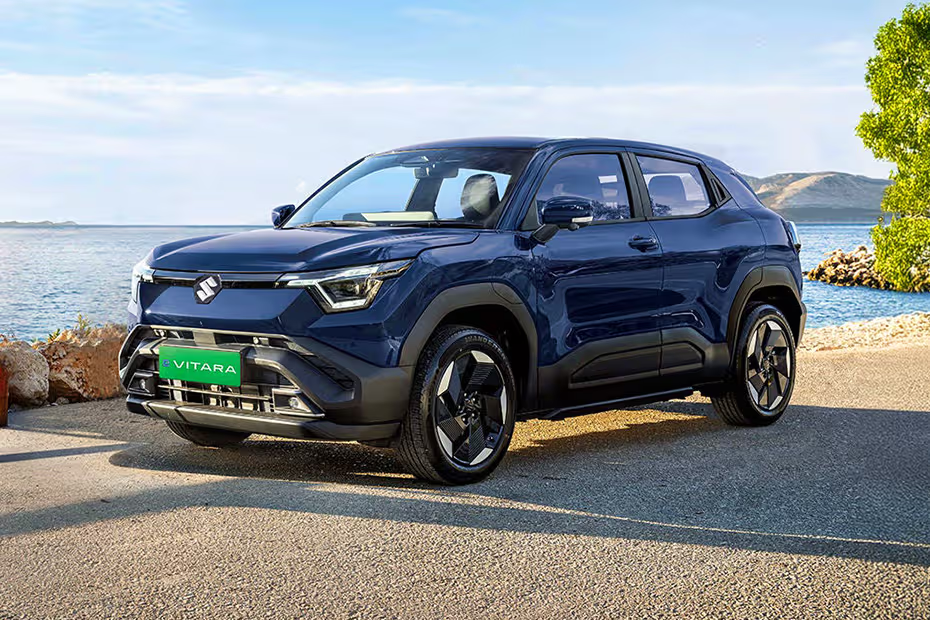
- Built on Maruti’s “Heartect-e” EV platform — structural stability + EV-specific battery layout expected to offer lower centre-of-gravity and safer ride.
- Expected to offer modern EV-SUV amenities: 360° camera, sunroof, likely ADAS (reports suggest Level-2 features) — good for first EV buyers.
- Commercial trust: Maruti’s widespread service network, cheaper maintenance, better spare parts availability makes e-Vitara attractive especially outside metros.
Verdict on comfort & features: Creta EV feels slightly more “refined & premium” especially in cabin finish and feature-set. e-Vitara banks on reliability and EV-first design — a safer bet if you want low hassle long-term ownership.
4. Ownership Cost, Service Network & Reliability — What Matters in Indian Context
This is where it becomes more interesting:
- Maruti e-Vitara: Maruti has the widest dealer and service network in India. Even in smaller towns / Tier-2 cities, service + spare parts support is strong. For EVs too, this gives big advantage.
- Hyundai Creta EV: Hyundai’s service network is decent, but still concentrated more in urban / semi-urban areas. For EV-specific servicing and battery support, newer infrastructure may lag in remote areas.
- Running / maintenance costs: Both being EVs, expected to remain low compared to ICE. But reliability of battery, servicing frequency, availability of quality spare parts will matter — in which case Maruti’s after-sales ecosystem might give e-Vitara an edge.
5. Who Should Buy What? — Buyer-Persona Based Verdict
✅ Buy Creta EV if you:
- Want best-in-class features, smoother tech-first cabin, refinement and don’t mind paying a bit more
- Live in metro or big city (good charging infra + service support)
- Want better performance & responsiveness, occasional long drives + quick acceleration
- Prefer more “premium feel” in interiors and modern comforts
✅ Buy e-Vitara if you:
- Want a trusted brand + widespread service network, especially if you live in smaller town / Tier-2-3 city
- Value longevity, simplicity and low maintenance costs more than “flashy features”
- Want balanced EV + SUV — stable range, EV design, but none of the worries that first-generation EV owners face
- Are price-sensitive and want best EV value for money
6. Verdict: Which is Better Overall (2025–26) — And Why It Depends on You
- As an all-rounder EV SUV in 2025–26, Creta EV wins on paper: better verified specs, strong features, proven Creta reliability, and established brand value.
- As a smart value + reliability-first EV SUV, e-Vitara wins — especially for buyers outside metro cities, or those looking for low-hassle everyday use, long-term minimal maintenance and better resale / service support.
👉 My recommendation:
- If you live in a metro/semi-urban city and want a modern EV experience, go Creta EV.
- If you live in smaller towns or want long-term peace of mind + network strength, pick e-Vitara.
Both are excellent for 2025–26 — and whichever you choose, you’d be ahead of the curve compared to typical ICE-SUV buyers.
Frequently Asked Questions About e-Vitara & Creta EV
Q1. Which EV SUV will realistically give 300+ km per charge in city conditions?
- Both e-Vitara and Creta EV (with base/standard batteries) can easily give 300–350 km on real-world urban use with AC, lights, moderate traffic.
Q2. Are these EVs suitable for long drives (200–300 km stretches)?
- Yes — but you need fast charging infrastructure on route. The larger battery variants (61 kWh for e-Vitara, 51.4 kWh for Creta EV LR) help. For 300+ km stretches, plan charging stops (~1 hour) or overnight charging at destination.
Q3. Which one will have better resale value after 3–5 years?
- Tough to predict. Creta EV may hold value if Creta brand remains hot and EV demand grows. e-Vitara may get better resale in non-metro areas due to Maruti’s trust & service network.
Q4. What about maintenance cost and battery health over long term?
- EVs have fewer moving parts → lower regular maintenance. Battery health depends on usage and charging patterns. e-Vitara’s LFP battery is considered durable. Both companies likely to offer battery warranties.
Q5. Which one should a first-time EV buyer choose?
- If you are new to EVs and want low maintenance + easy service + brand reliability → go e-Vitara.
- If you are comfortable with slightly higher initial cost but want better features and smoother EV feel → go Creta EV.
8. What to Watch Out For Before Buying (Your Own Pre-Purchase Checklist)
- Battery pack variant (choose larger battery if you plan long drives)
- Charging infrastructure in your city / state — check location of DC fast chargers or apartment/workplace charging support
- After-sales and service center reach — ensure there’s a trained EV service centre nearby
- Resale value potential — EV resale market still evolving; strong after-sales history helps
- Real-world range and driving habits (city vs highway vs highway+city mix)